Supporting Menopause in the Irish Screen Industry
The National Talent Academies and Screen Guilds of Ireland were delighted to partner on a Menopause Awareness Programme for the Screen Sector, which included collaborations with Screen Producers Ireland and Women in Film & TV Ireland on sessions on 101 awareness, soft skills for menopause management, cultural conversations, reframing narratives, and effective workplace practices.
Over five sessions, the programme brought together creatives, crew and industry leaders to open up conversations that have too often been left unspoken.
We’re now excited to share the Menopause resources that have been a key part of our programme. We hope they’ll be a support to those working in the sector who will inevitably be affected directly and indirectly by Menopause.
Over the programme, we designed and delivered the following sessions:
Session 1: Menopause 101 - Understanding the Basics - Provided a clear overview of menopause, covering key physiological and psychological changes. Designed to build foundational knowledge and demystify the experience.
Session 2: Soft Skills for Menopause Management - An interactive workshop equipping participants with practical strategies to manage symptoms and navigate personal and professional challenges during menopause.
Session 3: Writers Workshop - A hands-on session led by Jennifer Davidson, inviting participants to rethink and reshape menopause narratives through screenwriting and storytelling.
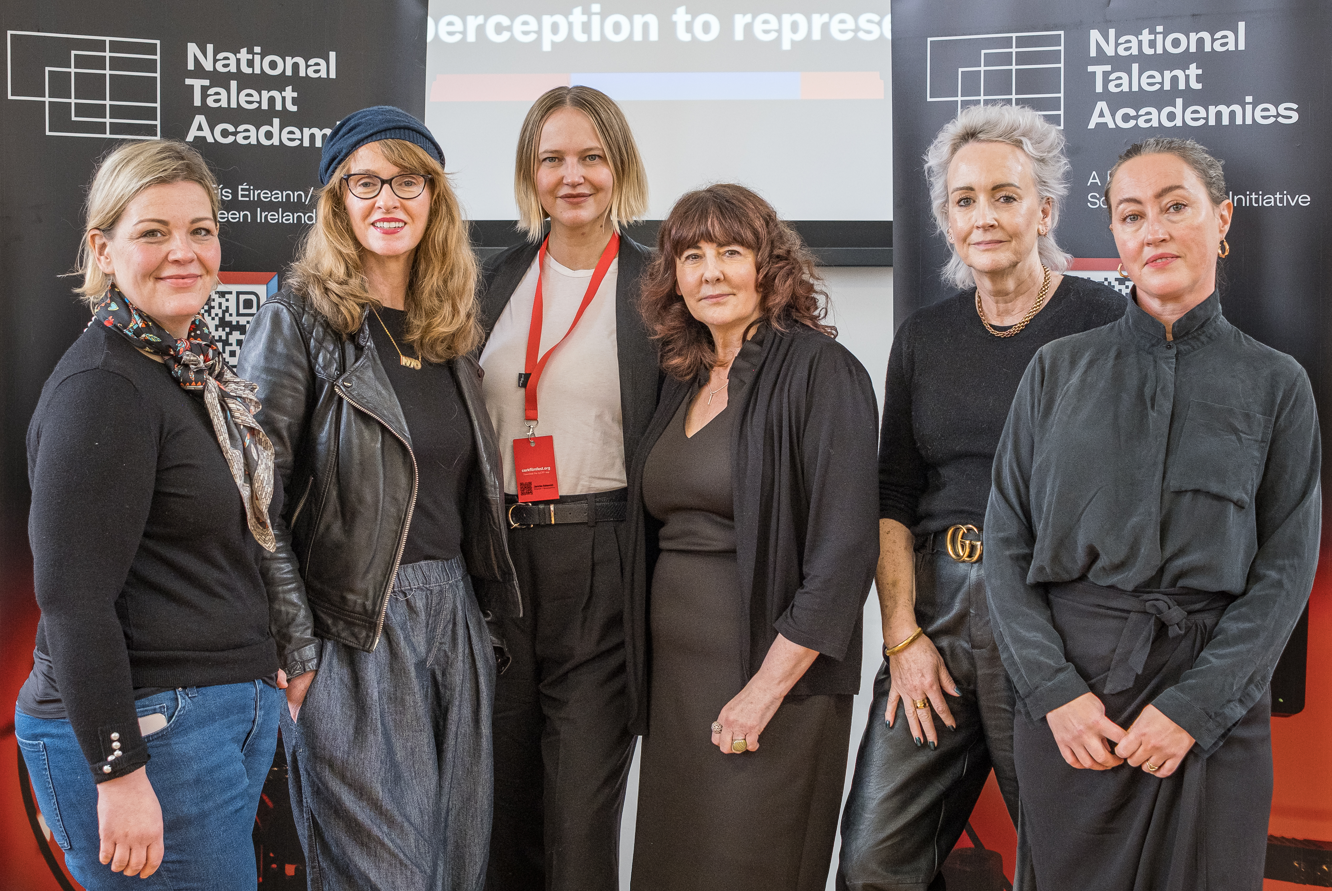
Session 4: A Dual Lens - From Perception to Representation Panel - This live-streamed panel, moderated by Dr Susan Liddy, featured leading voices from screen, including Academic Deborah Jermyn, Director Janicke Askevolde, Producer Max Brady, and Production Designer Louise Mathews. The panel examined how menopause, menopausal people, and mid-life women are perceived and framed in screen culture.
Session 5: Menopause and the Workplace – Focused on workplace realities, this session explored practical supports, rights, and strategies for navigating menopause within screen sector environments.
Impact
Across the programme, 123 people registered across five sessions — reflecting a strong appetite within the screen sector to better understand, represent, and support menopause.
The response highlighted both the scale of the issue and the value of creating space for open, informed conversation.
“The National Talent Academies are to be recognised and commended as industry innovators… doing crucial work to address the silence and stigma that still surround menopause… and building the foundations for a more equitable sector in the future.”
— Deborah Jermyn, Academic
Participants also spoke to the immediate impact of the sessions:
“The menopause awareness course was incredible and informative. I wish I had access to this information years before now… invaluable.”
— Rachel Meadows
For others, the programme resonated creatively and culturally:
“This was one of the most powerful workshops in the CIFF calendar… women over 45 are still not best represented on screen, and need to be better supported telling their own stories.”
— Karla
And the programme delivery itself was recognised:
“Every event they (National Talent Academies) organise is highly thought out and impressive… I would highly recommend any course they organise.”
— Trish
Together, this feedback reinforces the need for continued awareness, conversation, and action — across storytelling, workplace culture, and industry practice.
Looking Forward
This programme may be concluding, but the work continues; the conversation it has opened is only the beginning.
Menopause affects half the population, yet it remains underrepresented on screen and under-discussed within the workplace. The opportunity now is for each of us — across all roles in the screen sector — to carry this awareness forward.
That might mean taking time to better understand menopause and its impact. It might mean supporting a colleague, opening up a conversation, or simply creating space where it hasn’t existed before.
For those working in storytelling, it also presents a creative challenge — and an opportunity. To move beyond one-dimensional portrayals, to question inherited narratives, and to create work that reflects the complexity, nuance and reality of this stage of life.
Change doesn’t happen all at once. It happens in scripts, on sets, in production offices, and in everyday interactions.
We encourage everyone who engaged with this programme to continue that work — to stay informed, to support others, and to help shape a screen industry where menopause is understood, represented, and supported with honesty and respect.
Links to Resources
RECORDINGS (Linked)
Menopause & the Screen: A Dual Lens - From Perception to Representation Panel
FACT SHEETS (Linked)
Cognitive Behaviour Therapy (CBT) for Menopausal Symptoms Fact Sheet
Talking about Menopause at Work (for managers) Fact Sheet
GENERAL RESOURCES (Linked)
NATIONAL MENOPAUSE SOCIETIES (Linked)
North American Menopause Society
BOOKS & PUBLICATIONS (Linked – no affiliations)
All You Need to Know About Menopause, Catherine O’Keeffe
The XX Brain, Dr. Lisa Mosconi
The CBT Handbook, Pamela Myles and Roz Shafran
The Complete Guide to POI and Early Menopause, Dr Mandy Leonhardt and Dr Hannah Short
The Complete Guide to the Menopause, Annice Mukherjee
The Menopause Manifesto, Gunter Muehl and Dr. Jennifer Gunter
Partners
‘Addressing innovation, skills development and sectoral growth, the National Talent Academies is the result of additional stimulus investment provided by the Department of Tourism, Culture, Arts, Gaeltacht, Sport and Media, and forms part of a wider strategy to support skills development across all regions of Ireland, with a particular focus on diversity and inclusion.
The overarching aim of the National Talent Academies is to address and support current educational skills gaps in the screen sector. Retaining the diversity and inclusion focus present across all Academy initiatives, its ambition is to drive more Irish talent from all backgrounds and disciplines into the sector and develop greater awareness of the sector as a career path.’
‘Screen Guilds of Ireland represents Irish Film and Television Workers across the various Departments within the Irish Film and Television Industry. We currently represent Irish film and TV crew across many departments, Accounts, Art, Assistant Directors, Camera, Construction, Continuity, Costume, Facilities, Editing, Grips, Hair, Locations, Make Up, Modelmaking, Production, Prosthetics, Set Decoration, Sound, Special Effects, Stunts, Transport and Visual Effects. We are continuing to grow and endeavour in time to be fully inclusive of the Irish Film Industry as a whole.
SGI aims to promote excellence in all fields of Film and Television Production in Ireland, through the representation of its member Guilds made up primarily of Irish Film Crew. Each Department or Guild nominates a crew member to represent it in discussion and negotiation of all business relating to our professions within the Irish Film and TV Industry. We see ourselves in a unifying and informative role, engaging actively with Fís Eireann/Screen Ireland, Screen Producers Ireland, SIPTU, Screen Training Ireland and other recognised Industry bodies, on all matters concerning our members, the Irish Film crew.’
Women in Film and Television International is a voluntary foundation promoting greater representation of women on screen and behind the camera, with a membership of over thirteen thousand professionals worldwide. Women in Film and Television Ireland is a branch of Women in Film and Television International. The Irish branch is a voluntary body run by film and TV professionals of international standing. Our committee members represent the creative, business and technical divisions of the Irish audiovisual sector. We are all internationally credited and the recipients of industry-recognised awards. Our intention in creating this organisation is to ensure that the film and television industry functions as a meritocratic, sustainable and successful force into the future.
‘We are a representative group made up of dedicated members who look after, and out for, the interests of independent producers in Ireland.
SPI’s aim is to ensure a working landscape that allows our industry to thrive. We use our expertise and resources to forge a strong and sustainable position for creative entrepreneurs working in independent film, television, animation and digital production.’