Shadowing is a dynamic and immersive work-based learning experience that provides individuals with the invaluable opportunity to observe and learn from professionals in a specific role. During a shadowing program, participants, known as "shadows", closely follow and observe the day-to-day activities of an experienced professional.
This hands-on approach allows shadows to gain real-world insights into the screen industry, understand the nuances of various tasks, and witness effective problem-solving strategies in action. Beyond just observing, shadows often have the chance to ask questions, seek guidance, and actively engage in the workplace environment. Through this personalised exposure, shadowing becomes a catalyst for professional development, fostering a deeper understanding of roles, responsibilities, and the practical skills required for success.
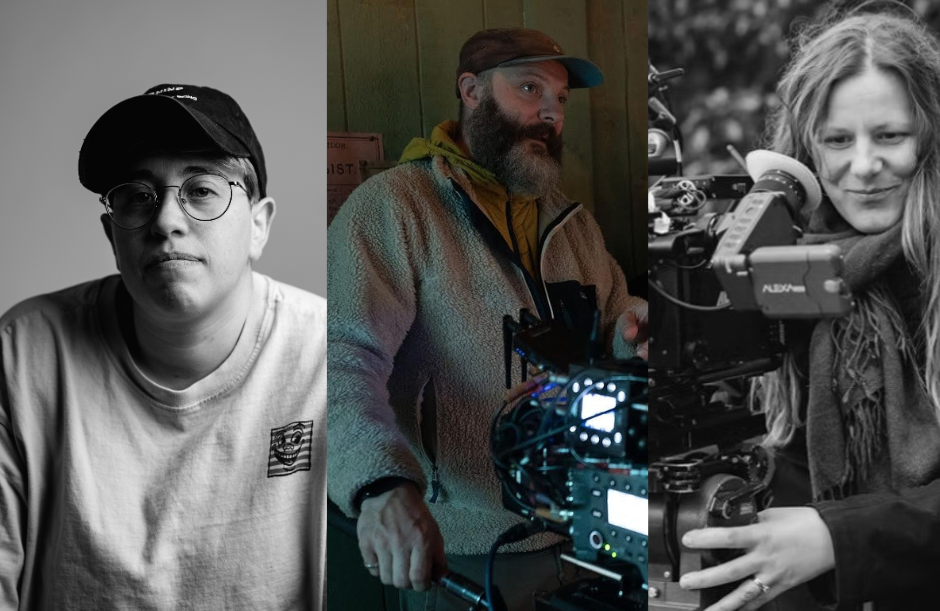
Ultimately, shadowing serves as a bridge between theoretical knowledge and practical application, empowering individuals and inspiring a new generation of skilled and motivated professionals. Two beneficiaries of this program, Alba Fernandez and Jaro Waldeck offer a glimpse into their transformative shadowing experiences.
Alba Fernandez is a Cinematographer based in Dublin and is currently one of Ireland’s most exciting female cinematographers. Recent work includes Callus and Animal, both winners of Best Cinematography at the European Cinematography Awards 2023, Stable (Winner of Best Cinematography at Women in Film & TV Ireland Showcase 2023) and Licence for Nil, which were all selected for Galway Film Fleadh 2023. She also shot Irish language feature Documentary Reds na hEireann for TG4 and Virgin Media TV’s Inside The Hospice alongside Eleanor Bowman. In 2021, she won the Donal Gilligan Award for Best Cinematography in a Short Film for her work in Faitíos.
Jaro Waldeck is a Director of Photography (DOP) and member of the Czech Society of Cinematographers. She has a Bachelor’s degree in Cinematography from Columbia College Chicago and a Master’s degree in Cinematography from the Film and Television Faculty of the Academy of Performing Arts, Prague. She has shot over 40 short films and several documentary features as well as her first narrative one. Jaro is the former Vice Chair and current board member of Women in Film and Television Ireland.
Embarking on a Journey of Professional Development
Both shadows said that learning about the differences working on a large scale production was a big motivator in applying for the pilot scheme. “I wanted to learn what’s required from a DOP on a larger set. How they communicate and the progression of their creative vision” said Alba. While Jaro talks about how the scheme allowed her “to get the opportunity to experience how a TV series production is run from the perspective of a DOP”.
Setting Expectations
Alba and Jaro came to the scheme with distinct expectations. Jaro hoped for exposure to a mixture of pre-production and on-set experiences “I wanted to attend as much prep as possible, including working with the different departments, finally I wanted to be able to experience some days on set”. While Alba’s experience went way beyond her expectations “I was a bit anxious as I had never been on a set that required more than 20 people and as such I expected a very fast paced, pressure cooker type of environment but it was completely the opposite”.
Building Relationships
The two shadows found the professionals they were shadowing to be very responsive and helpful. According to Jaro “He [Peter Robertson DOP] was always ready and willing to answer any questions I may have had”. Alba reflected on all of the crew she worked with “Everyone is so generous with their time and expertise I was able to learn much more about other departments. JJ [Rolfe DOP] was great at offering not only technical on-set advice but also more general career and life advice. He was quite happy to give me a lot of his time and by the end I knew he’d have my back if I ever needed some creative advice”.
Unanticipated Insights and Surprises
Jaro professed her surprise at the similarities to her previous experiences and “How manageable the process of filming a TV show was - how similar it was to my own experience working on shorts and features”. For Alba, her time on set showed her that laying a strong foundation is imperative “Most of the work is prep, and not just in pre-production for a specific project but all throughout your career. Everything you learn over the years becomes useful and the working relationships you develop can make your work stand out more”.
Distinguishing Features of Shadowing
Both found that having the space to monitor a fully functioning set and have a guide along the way was a big opportunity “You can get as close as you want and immerse yourself in a developing creative project” affirmed Alba. According to Jaro “In general, learning on set and from a professional HOD always beats classroom setting and theory”.
Communication is Key!
The Shadows were reassured of the fact that even on bigger scale sets with multiple departments and large teams, the crew found a way to make sure that the lines of communication stayed open “the realisation that camera and lighting teams are made up of highly skilled crew members and the DOP just delegates the work to them, was a good reassurance” said Jaro. “Having a back-up plan and a good understanding with you director and other departments will be very helpful when you’re under pressure” proclaimed Alba.
Lessons for the Future
Alba believes that appreciation of other skills are key “Everyone respects each other skills and trusts their dedication to the work so when mistakes happen there’s no stress or pressure put on them”. For Jaro the most important lesson of the shadowing scheme was the social one “how to conduct oneself on set, how to be diplomatic, inclusive, open to suggestions, when to suggest a solution and when to let go”.
The Shadowed Professional’s Perspective
JJ Rolfe, a hugely experienced DOP based in Dublin working in Film, TV and Commercials was shadowed by Alba Fernadez. He provides his perspective on the shadowing process: “I think shadowing is a really important part of the learning process. Filmmaking is such a practical mixture of collaborative creativity and technical skill that the best way is to learn by observation and the osmosis of shadowing works great for passing situational knowledge on”. He also echoes Alba’s thoughts on communication and respect being a key part of the film making process “I think the skills that I use most on a day to day basis are trying to have clear and concise communication and have the ability to trust the crew that you’re working with, being a Head of department (HOD) is all about listening and speaking when it’s needed”.
Conclusion
The NTA Crew Shadowing Scheme is hugely beneficial, not just in supporting individuals stepping up into HOD roles but also in shaping them into future crew that can be shadowed. This cycle of growth and development is vital for the film & TV industry.
Application Procedure
The scheme’s database has an open application format and can be applied for at any time.
For further information on the scheme and to apply, please click HERE. If you have any further queries please email crew.shadowing@nationaltalentacademies.ie
The National Talent Academies’ courses are open to all regardless of gender, race, religion, sexual orientation or disability.